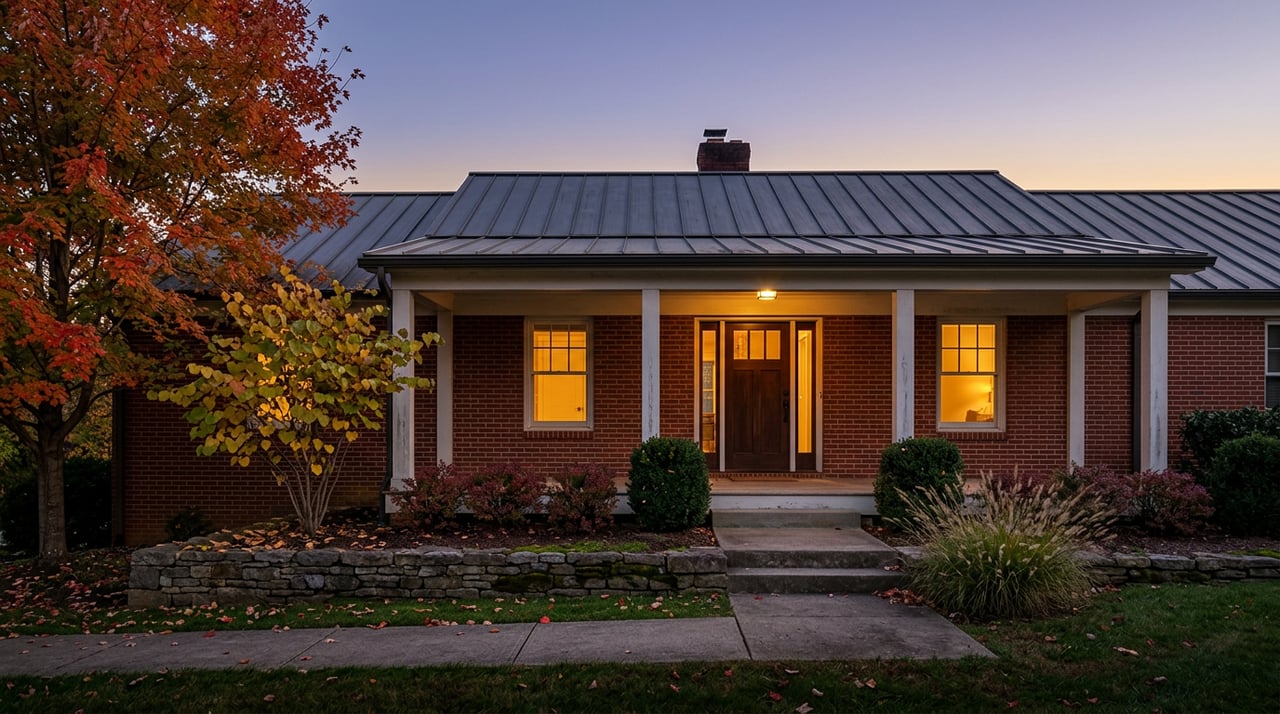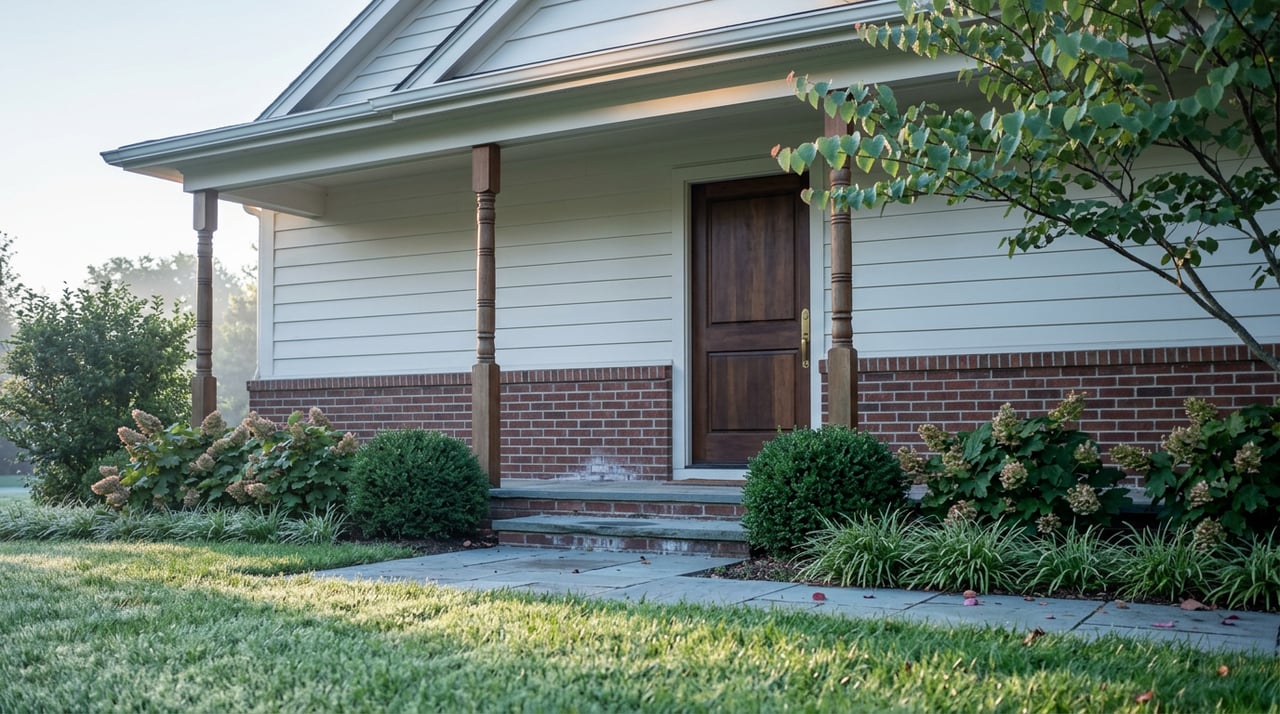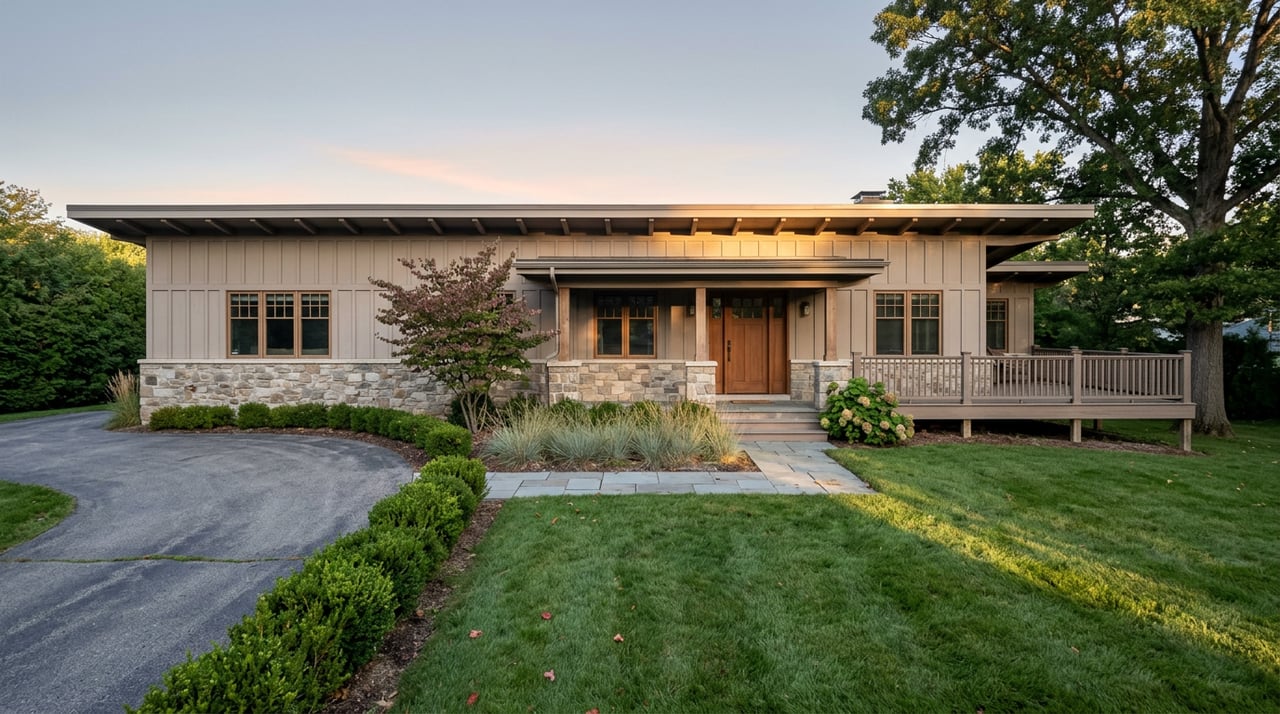
Two houses, ten minutes apart. Same style of ranch, same finished square footage, same rough vintage of 1970s brick with a newer roof. One sits off Route 340 in Stuarts Draft. The other sits inside the Waynesboro city limits, maybe half a mile past the line where Augusta County ends and the independent city begins. Both are listed within a few thousand dollars of each other. A buyer touring both in the same afternoon could be forgiven for assuming the only real difference is which kitchen has been updated more recently.
The bigger difference shows up on the tax bill, not the listing sheet.
Two governments, one commute
Virginia does something most states don't. Cities here aren't part of the counties that surround them. They're their own separate governments, with their own tax rates, their own school systems, and their own budget calendars. Stuarts Draft isn't a town with its own charter. It's an unincorporated community inside Augusta County, which means its real estate taxes are set by the Augusta County Board of Supervisors. Waynesboro, a few miles down the road, is an independent city with its own council, its own budget, and a tax rate that answers to nobody but Waynesboro voters.
For the fiscal year that ran from July 2025 through June 2026, that structural split produced two very different numbers. Augusta County held its real estate tax rate flat at 52 cents per $100 of assessed value, the same rate the Board of Supervisors had been running for the prior cycle. Waynesboro City Council went the other direction, raising its rate from 77 cents to 82 cents per $100 of assessed value as part of that year's budget.
Here's what that gap looks like on a home assessed around $380,000, which sits close to the middle of what both markets have been listing for this year:
| Augusta County (Stuarts Draft) | City of Waynesboro | |
|---|---|---|
| Real estate tax rate | 52¢ per $100 assessed | 82¢ per $100 assessed |
| Annual bill on a $380,000 assessment | about $1,976 | about $3,116 |
| Difference | about $1,140 per year, roughly $95 a month |
That's not a rounding error. It's a second mortgage payment's worth of difference, every year, for as long as you own the house, purely a function of which side of an invisible line your deed sits on.
What Waynesboro's extra thirty cents is paying for
Waynesboro didn't raise its rate in a vacuum. The same budget that pushed the levy to 82 cents also funded ten new public safety positions, six firefighters, two police officers, and two sheriff's deputies, along with a new $300,000 community vitality fund aimed at supporting local nonprofits. City council also raised the meals tax from 7 percent to 7.5 percent, putting Waynesboro among the highest meals tax rates in the state alongside Richmond and Portsmouth, as part of what staff described as a broader effort to diversify revenue instead of leaning on real estate taxes alone.
Mayor Kenny Lee framed the increases as building toward growth, saying the budget would "address the needs of our city and keep us in a forward trajectory." Whether or not that trajectory shows up in your daily life depends on how much you value having a full-time city fire department and downtown-focused programming a short drive from your front door, rather than relying on the volunteer and regional coverage that serves most of the surrounding county.
Where Augusta County is putting its money instead
Holding a tax rate flat doesn't mean a county has nothing going on. Augusta County's proposed general fund budget for that same cycle ran just over $145 million, with a projected 3 percent growth in real estate tax revenue even without touching the rate, driven by new construction and rising assessments across the county. Supervisors also approved a midyear 4 percent cost of living and merit increase for county employees.
Two capital projects stand out for anyone specifically weighing Stuarts Draft. The county is partway through building an $80 million courthouse in Verona, expected to begin operations in early 2026, funded through the capital budget rather than a rate hike. And rather than raise real estate taxes to cover a $2 million increase in debt service for the schools, supervisors chose to pull that money from the county's capital account, specifically to fund what Augusta County Schools Superintendent Eric Bond called badly needed renovations to middle schools in Stuarts Draft and Fort Defiance.
In other words, the county is spending real money on Stuarts Draft's own school building. It's just choosing to finance it by drawing down savings instead of asking every property owner to pay more each year. That's a legitimate approach, but it also means the county has less room to absorb a future capital need without eventually raising the rate, something worth asking about if you're planning to be in the house for the next decade.
The employers that actually anchor Stuarts Draft
Part of what keeps Stuarts Draft distinct from a bedroom community of Waynesboro is that it has its own employment base sitting right off the highway. The Target Regional Distribution Center on Mount Vernon Road is one of the larger employers in the immediate area, and The Hershey Company operates a distribution facility in Stuarts Draft as well, based on current job postings for shift supervisor and warehouse roles there.
Neither of these shows up in a median price chart, but they matter for anyone comparing the two markets. A distribution hub running multiple shifts creates steady demand for rentals and starter homes near the interchange, which is part of why Stuarts Draft's for-sale inventory tends to move quickly. Listings there spent a median of 38 days on market in July 2026, a notable drop from the year before, even as the broader county market has cooled in places.
Reading the two markets side by side
As of this month, Waynesboro homes were listing for a median of $369,000, while Stuarts Draft listings ran closer to $393,000 as of July. Those numbers move month to month and shouldn't be treated as fixed, but they tell you something useful on their own: list prices in the two markets are close enough that a buyer scrolling a search results page might not think to ask which government is setting the tax rate on either one.
That's the piece worth carrying into a house tour. A few questions worth asking before you fall for a particular floor plan:
- What is the current assessed value on this specific property, not just the county or city average?
- When was the last reassessment? Augusta County reassesses on a four to six year cycle, with the most recent effective January 1, 2024. Waynesboro reassesses every two years, in odd years, across its roughly 10,300 parcels, which means a Waynesboro assessment can shift more often than one in the surrounding county.
- Has either locality signaled a rate change is coming in the next budget cycle? Both the county and the city set rates fresh each spring, so a number from last year's budget isn't guaranteed to hold for the next one.
None of this means one town is the better choice. A young family that wants full-time fire and police coverage, downtown programming, and services close by may find Waynesboro's higher rate is money well spent. A buyer who wants more house for the number on the sales contract, and who's comfortable with a more rural service model, may prefer what Augusta County is offering at 52 cents. The point isn't that one number is right. It's that the number exists, and most people comparing these two markets never see it until the first tax bill arrives.
A few common questions
Does Stuarts Draft have its own separate tax rate from the rest of Augusta County? No. Stuarts Draft is unincorporated, so it's taxed at the same countywide rate the Board of Supervisors sets for all of Augusta County, currently 52 cents per $100 of assessed value.
Could Waynesboro's rate go higher again next year? It's possible. City council reviews and sets the rate annually, typically finalized in May for the fiscal year beginning that July, and the most recent budget cycle explicitly framed the meals tax increase as part of an effort to reduce future reliance on real estate tax hikes, which suggests the rate conversation isn't finished.
Is a lower tax rate always the better financial deal? Not necessarily. A lower rate on a property that appreciates more slowly, or that requires a longer commute to reach the same jobs, can cost more over time than a higher rate in a location with stronger long-term value and services included. The rate is one variable, not the whole equation.
If you're weighing a move between Stuarts Draft and Waynesboro, or anywhere else in Rockbridge County and the Shenandoah Valley, the numbers on the listing sheet are only part of the picture. Mary Beth Harris can walk you through the assessed value, the current levy, and what each town's budget priorities might mean for your bottom line, along with how a property's condition and layout affect what a renovation or staging plan could realistically add before you sell. Let me help you find a house and create a home.