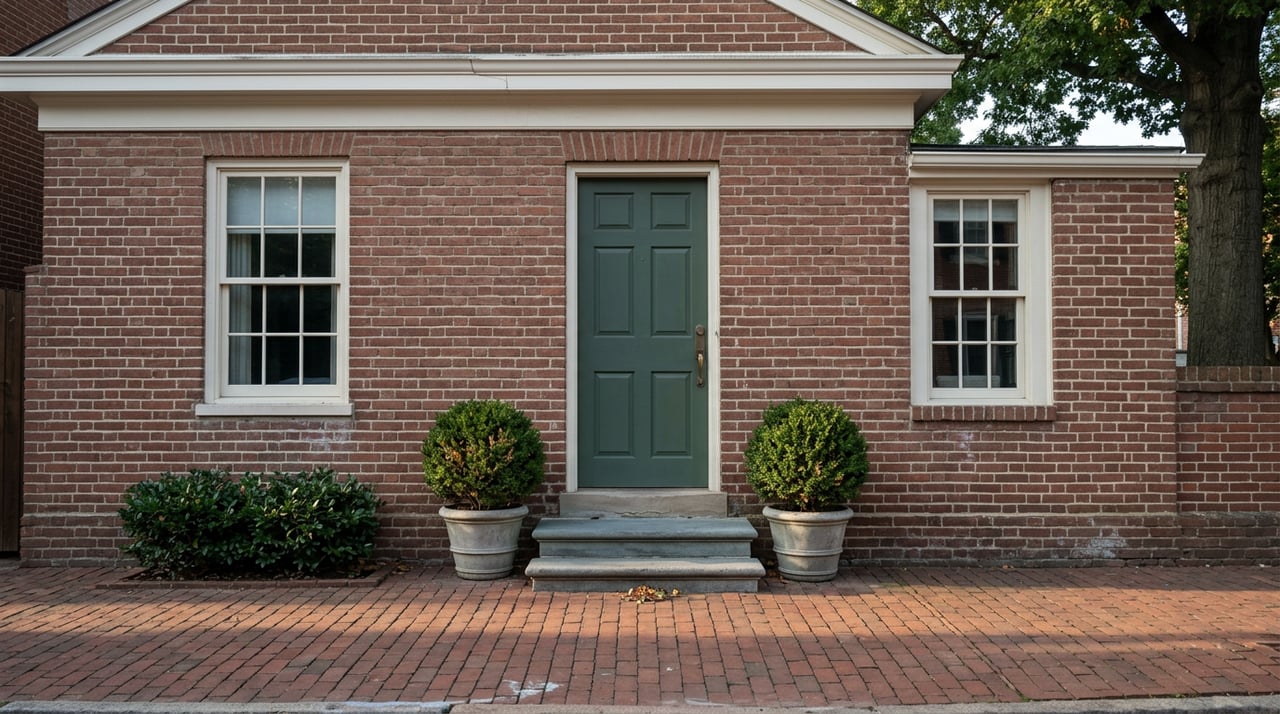
Drive down Main Street on a Saturday afternoon and you'll get the version of Lexington built for a camera. Brick storefronts, a horse-drawn carriage, a cadet in dress grays crossing at the light. It's real, and it's also the least interesting thing about how this town actually spends its time.
The more useful observation, the one a person who's lived here five years would nod at and a first-time visitor would miss entirely, is this: Lexington's cultural life doesn't run on institutions with staffs and operating budgets. It runs on a small number of people who each hold two or three jobs in the same small economy. A high school teacher's classroom project becomes a museum exhibit that lands on national radio. A potter's family glaze recipe becomes the anchor of a gallery representing dozens of other makers. A church sanctuary that hosts Sunday services on Sunday is the same room where the town's orchestra raises money on a Tuesday night. There's no separate building for "the arts" here. There's a rotation.
A Two-Room Museum With a National Audience
A short drive north of downtown, off Route 11 in the village of Brownsburg, an all-volunteer museum has been quietly outperforming its size for more than two years. The Brownsburg Museum occupies a small frame building and is open only on weekends, Saturdays from 10 to 4 and Sundays 1 to 4, admission free. Its current exhibit, Interwoven: Unearthed Stories of Slavery, traces one enslaved and later emancipated family, the Haliburtons, from Rockbridge County to Liberia and back through the words of their living descendants.
What makes this worth knowing if you already live here isn't the subject matter alone. It's how the exhibit got made. Rockbridge County High School students in a dual-enrollment African American Studies class did primary research using census data and county birth and death records. Fifth graders at Central Elementary helped shape the questions the older students chased. Graduate students from the University of Virginia contributed research, and Washington and Lee University's special collections supplied historical documents. A local marketing professional, Dee Papit, wrote the narrative. None of that is paid museum staff in the conventional sense. It's the same handful of Rockbridge County residents and institutions doing double duty.
The payoff was real. The exhibit ended up featured on WBUR's Here & Now, a national public radio program with a listening audience of more than five million, after a Boston-based relative of a museum board member heard about the project during a visit home and pitched it to a colleague. As museum board chair Julie Fox put it in a report by Cardinal News, "For such a small place, it tells such a big story." The exhibit was set to run for three years from its March 2024 opening, so if you haven't made the drive yet, there's still time, but not forever.
Second-Generation Glaze on Washington Street
Walk two blocks off Main and you'll find a different version of the same pattern. Earth, Fire & Spirit Pottery sits at 15 W. Washington St., a working gallery built around handmade high-fire stoneware finished in copper red and rutile blue glazes that trace back to founder Don Poole's own recipes. The gallery is now run by his family, Amber Poole, Daniel Caruthers, and Jessy Poole-Caruthers, continuing the line while also representing more than 40 local and regional artists and craftspeople under one roof.
That's the mechanism again. A single working studio becomes the display case for an entire regional craft economy, because there's no separate gallery infrastructure to do it any other way. If you want to see what a downtown storefront in a town this size can actually sustain, Earth, Fire & Spirit Pottery is a better answer than any tourism brochure.
The Sanctuary Doubling as a Concert Hall
Rockbridge County doesn't have a dedicated concert hall, so Lexington Presbyterian Church has become one by default. Within the same summer stretch, its sanctuary hosted a William Hsieh piano recital of Bach, Beethoven, and Chopin with proceeds benefiting the Rockbridge Symphony Orchestra, and a separate Music At Noon concert featuring tenor Adam Williams performing songs from the 1960s and '70s. Neither the orchestra nor the noon concert series owns a performance space. They borrow one that was built for an entirely different purpose and happens to have good acoustics and a piano.
A few blocks away, New Views Theatre staged an original play, "Planet First," written by local playwright William R. Duell, at the Johnson Theatre inside the Lenfest Center. That's not a touring production passing through. It's a homegrown script performed by a local company in a college-owned theater, which is its own version of the borrowed-space pattern that keeps showing up across this town's cultural calendar.
None of this is unique to Lexington in the sense that small towns everywhere improvise. What's specific to this one is how consistently the improvising works. Cocoa Mill Chocolate Company, a downtown chocolatier, has had a truffle box named "Best Overall" by the Wall Street Journal over Godiva and Sees. That's a candy shop on a small-town Main Street outperforming national brands, the same shape of story as a two-room volunteer museum landing on national radio. Small scale keeps producing outsized outcomes here, and it's worth noticing that as a pattern rather than a series of coincidences.
The Actual Weekly Circuit
If you want to see how residents, not visitors, structure their week, it looks less like a festival calendar and more like a set routines:
- Wednesdays start at McCrum's Parking Lot, where the farmers market runs every week, all year round, and continue at Devils Backbone Outpost, where the weekly Growler Grab means half-price 64-ounce fills all day.
- Thursdays belong to Halcyon Days Cider Co. in nearby Natural Bridge, recently under new ownership by Liz and Ryan Colvin and profiled by Virginia Living, which hosts a paint-and-relax cider night.
- Sundays slow down at Ecco Adesso Vineyards, where the routine is a fire, board games, pizza, and wine rather than anything staged for an audience.
That's not a tourist itinerary. It's a set of standing appointments, the kind you only know about if you're already here.
The One Weekend That Closes Ranks
Once a year, all of that decentralized activity funnels into one place. The Rockbridge Community Festival, established in 1976 and organized jointly by the Lexington Rotary Club and the Lexington-Rockbridge Jaycees, closes three blocks of Main Street to traffic for a free day of vendors, music, and food, with proceeds going directly to local nonprofit charities. It happens in late summer, and it's worth checking the festival's own site for the confirmed date as it approaches, since the exact Saturday shifts from year to year. What doesn't shift is who's running it: the same civic clubs, the same volunteer structure, the same small group of people wearing the organizer hat this weekend and the museum docent or gallery co-owner hat the next.
That's the thing worth holding onto if you live here. The postcard version of Lexington sells the town as a backdrop. The actual version is a town where a remarkably small number of people keep building things that outperform their size, whether that's a two-room museum reaching a national audience or a chocolate shop beating out Godiva. It's not a bigger cultural scene than the postcard suggests. It's a more concentrated one, and that concentration is exactly why it keeps working.
If you're the kind of person who notices details like these when you live somewhere, that same attention tends to matter when it's time to buy, sell, or renovate a home here too. Mary Beth Harris has spent her career paying attention to Rockbridge County at that level, and she'd be glad to put that same local knowledge to work for you. Let her help you find a house and create a home.