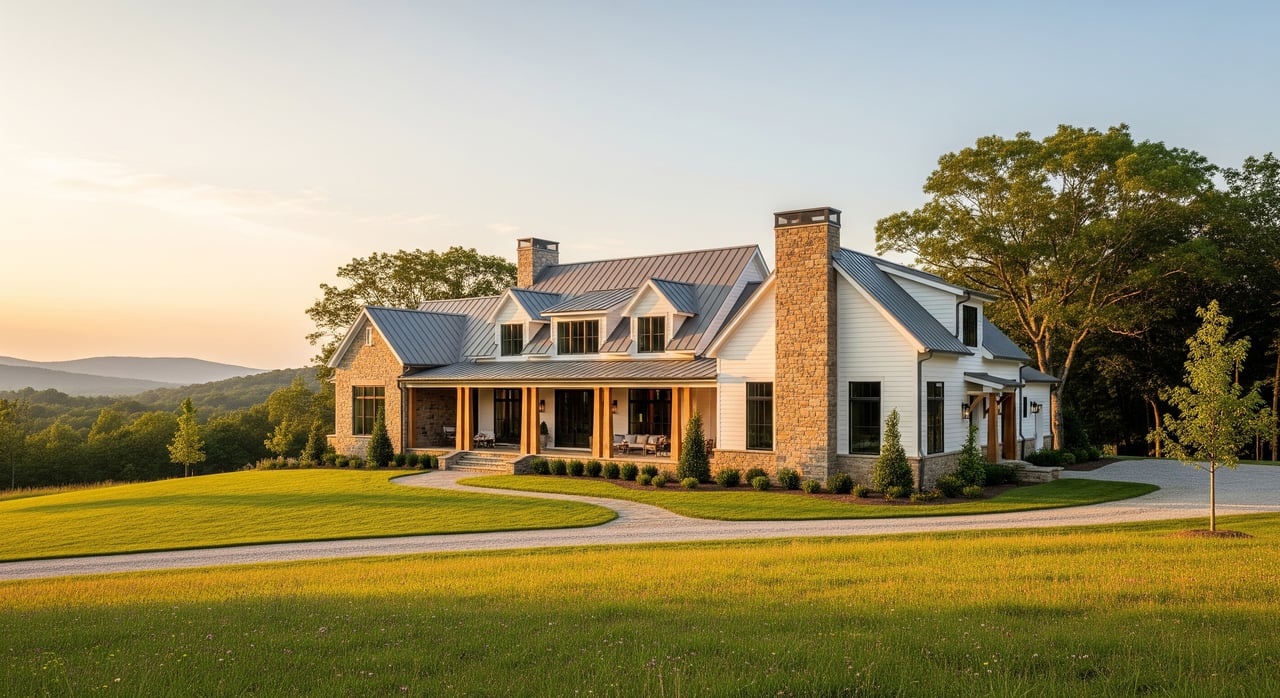
Thinking about buying a home in Weyers Cave but worried about the down payment? If your goal is to stretch your budget without stretching your timeline, a USDA loan could be the right fit. Many homes in rural parts of Augusta County may qualify, and you could secure financing with little or no money down.
In this guide, you will learn how USDA loans work, how to check if a Weyers Cave address is eligible, and how USDA compares to FHA and conventional loans. You will also find a clear application checklist and local tips to avoid common delays. Let’s dive in.
USDA loan basics
USDA loans are designed to help eligible buyers purchase a primary home in designated rural areas. Two USDA programs support single-family buyers.
Two program types
- Guaranteed Loan Program: You work with an approved private lender. USDA guarantees part of the loan, which enables 0% down options for eligible borrowers.
- Direct Loan Program (Section 502): You borrow directly from USDA. This program serves very low- and low-income households and has tighter limits and guidelines.
Borrower eligibility
- Location: The property must be in a USDA-eligible rural area.
- Income: Your household income must fall at or below the USDA limit for Augusta County and your household size.
- Occupancy: The home must be your primary residence.
- Credit and repayment: Lenders evaluate credit history, debt-to-income, and ability to repay. Minimum credit scores vary by lender.
Property eligibility
- Commonly eligible: Single-family, owner-occupied homes. Some condos, modular, manufactured homes, and new construction may be eligible if they meet program and lender standards.
- Condition: The home must be safe, sanitary, and structurally sound.
Fees and costs
- Down payment: USDA Guaranteed loans typically allow 0% down.
- Program fees: USDA charges upfront and annual guarantee fees. These change over time. Confirm current amounts with USDA or your lender.
- Closing costs: Expect standard lender fees, taxes, insurance, and prepaid items, similar to other loan types.
Weyers Cave and eligibility
Weyers Cave is a community in Augusta County. USDA eligibility depends on the exact property address, not just the town name. That means two homes a mile apart can have different outcomes.
Nearby independent cities or denser municipalities, such as Staunton or Waynesboro, are usually not eligible for USDA rural financing. Many rural parcels in Augusta County can qualify, but you should verify every property at the address level before you get too far into the process.
Local factors that matter
A few property details often affect underwriting and timelines in Augusta County:
- Utilities and access: You need adequate potable water, sewage or an approved septic system, and reliable road access. Private roads may need documented maintenance agreements.
- Flood zones: Homes in a Special Flood Hazard Area will require flood insurance, which affects monthly costs.
- Acreage and use: Modest acreage is common, but properties focused on agricultural or commercial use may face restrictions.
- Manufactured homes and condos: Some lenders accept them if they meet foundation and code requirements. Confirm early.
Verify property and income
Use these steps to confirm eligibility quickly:
- Check the exact street address on the USDA property eligibility map.
- Confirm your household income with the USDA income eligibility tool for Augusta County and your household size.
- Look up parcel details, zoning, utilities, and access through Augusta County’s GIS or planning office.
- Review FEMA flood maps to see if flood insurance may be required.
- Speak with one or two USDA-experienced local lenders for pre-qualification and a lender-side eligibility check.
- Work with a local real estate agent who understands USDA transactions and can spot potential issues early.
USDA vs FHA vs conventional
When you compare loans, look beyond down payment. Consider total monthly cost and long-term flexibility.
Down payment
- USDA: Typically 0% down for the Guaranteed program.
- FHA: Minimum 3.5% down for many borrowers.
- Conventional: Options can start around 3% down for eligible buyers; 20% avoids PMI.
Mortgage insurance and fees
- USDA: Upfront and annual guarantee fees that function like insurance. Rates change, so verify current amounts.
- FHA: Upfront mortgage insurance premium plus annual MIP. MIP often lasts for the life of the loan in many cases.
- Conventional: Private mortgage insurance can be canceled when you reach sufficient equity, often near 20%.
Credit and underwriting
- USDA: Lender-set minimum scores and overlays. Many lenders look for moderate credit.
- FHA: Often more flexible for lower credit profiles, with specific score thresholds tied to down payment.
- Conventional: Generally stronger credit needed, especially for low down payment options.
Income and property limits
- USDA: Household income must be within area limits, and the address must be USDA-eligible.
- FHA: County-based loan limits apply.
- Conventional: Conforming loan limits apply unless you use jumbo financing; no rural location requirement.
Property condition
- USDA: Must meet safety and habitability standards; repairs may be required.
- FHA: Also requires property to meet specific minimum standards.
- Conventional: Focuses on value and marketability; condition requirements vary by lender and investor.
Availability
- USDA: Available only in eligible rural areas.
- FHA and conventional: Broadly available across most locations.
Key takeaway for budget-conscious buyers in Weyers Cave: USDA can unlock a zero-down path when your address and income qualify. Compare the full monthly payment and long-term costs across all options before deciding.
How the application works
Here is a typical path for a USDA Guaranteed loan:
- Pre-qualification: Connect with a USDA-approved lender to review income and basic credit.
- Property check: Confirm the home’s exact address on the USDA eligibility map.
- Full application: Complete the loan application. The lender verifies income, assets, employment, and credit.
- Appraisal and inspection: The appraisal sets value and checks for required repairs to meet USDA standards. A home inspection is also wise for your protection.
- Underwriting and guarantee: The lender underwrites and may submit the file for USDA’s guarantee, as required.
- Closing: You sign final documents and receive keys when the loan funds.
Documents you will need
Lenders often request:
- Government-issued photo ID and Social Security number
- Recent pay stubs, W-2s, and federal tax returns (often two years)
- Bank statements and asset documents for reserves and closing funds
- Proof of additional income sources, if applicable
- Employment verification
Property condition and repairs
Appraisals for USDA loans verify value and basic safety, sanitation, and structural soundness. If the appraiser flags issues, you might need repairs completed before closing. In some cases, lenders may allow repair escrows or holdbacks. Ask your lender how these work and what is allowed.
Timeline and planning tips
Most USDA purchases follow timelines similar to FHA or conventional loans. Build in time for repairs if the appraisal notes required items. Ordering the appraisal and confirming address-level eligibility early helps you avoid surprises.
Build a realistic monthly budget
Look at your full payment, not only the down payment:
- Principal and interest
- Property taxes and homeowners insurance
- USDA annual fee, if applicable
- Flood insurance, if the property is in a special flood hazard area
- HOA or road maintenance fees, if any
A side-by-side estimate for USDA, FHA, and conventional helps you see the tradeoffs. Ask your lender for scenarios with today’s rates and fees.
Pitfalls to avoid in Augusta County
- Assuming the whole town is eligible. Always verify the exact address.
- Overlooking septic, well, or private road issues that create delays.
- Ignoring flood zones and the added cost of flood insurance.
- Comparing only down payment and not the total monthly cost over time.
- Waiting to talk with a USDA-savvy lender until after you make an offer.
Your next steps in Weyers Cave
- Identify a USDA-experienced lender and request pre-qualification.
- Run address-level eligibility for any home that interests you.
- Confirm parcel, utility, and access details through county resources.
- Build a sample budget that includes taxes, insurance, and program fees.
- Walk homes with an agent who understands USDA standards and local nuances.
If you want a clear path from search to keys, with guidance tailored to Augusta County and the broader Shenandoah Valley, let’s connect. I can help you zero in on homes that fit your budget, your lifestyle, and your loan program, and coordinate the steps so you move with confidence. Reach out to Mary Beth Harris. Let me help you find a house and create a home.
FAQs
What is a USDA loan in Augusta County?
- A USDA loan is financing for primary residences in eligible rural areas, often with 0% down, subject to income limits and property standards.
How do I know a Weyers Cave address qualifies?
- Enter the exact street address into USDA’s property eligibility map and confirm with a USDA-approved lender for a lender-side check.
What are USDA income limits for my household?
- Limits vary by county and household size; use USDA’s income eligibility tool for Augusta County and verify with your lender.
Can I buy a manufactured home with USDA?
- Some manufactured homes qualify if they meet USDA and lender requirements, including foundation and code standards; confirm early in the process.
How long does a USDA loan take to close?
- Timelines are similar to FHA or conventional, but allow time for any required repairs and the USDA guarantee step.
Can I use USDA on a home with acreage?
- Yes, if the property is primarily residential and meets program rules; properties centered on agricultural or commercial use may face restrictions.